


The latest printer technologies
2017 is already shaping up to be an exciting and maybe an even transformative year for the printing industry. Almost every major manufacturer has an innovative product or two in the pipeline, with new printers and technology coming out just about every month. Printing expectations have changed a lot over the last few years and many of the recent advances in print technology seem to be a response to those shifting expectations.
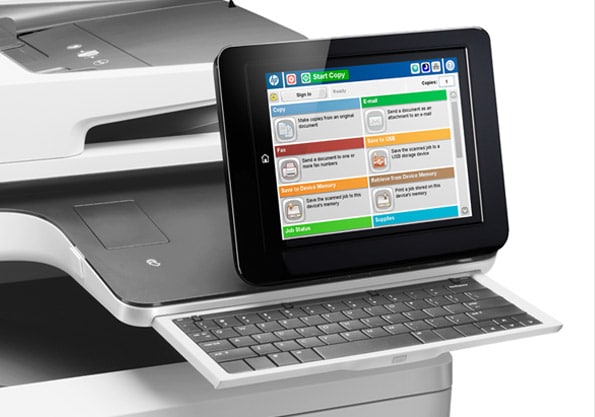
Brother introduced a radical idea the year before last and thus far seems to be getting a good response. That idea? Why not make printing super cheap! They introduced bare-bones printer models that, while they may cost a bit more out of the box, print pages at a fraction of what you’d expect from most competitors. As a result, the Brother HL-L2340DW Wireless Laser Printer received glowing reviews from Forbes in May of 2015. This past year, they introduced their INKvestment line of printers whose extra-large and affordable cartridges that include up to 2.5 years worth of ink out of the box. Brother’s MFC-J985DW and MFC-J985DW XL color inkjet printers are designed to print up to 2,400 monochrome pages for as little as one cent per page.

3D printing, also known as additive manufacturing (AM), refers to processes used to create a three-dimensional object in which layers of material are formed under computer control to create an object. Objects can be of almost any shape or geometry and are produced using digital model data from a 3D model or another electronic data source such as an Additive Manufacturing File (AMF) file. STL is one of the most common file types that 3D printers can read. Thus, unlike material removed from a stock in the conventional machining process, 3D printing or AM builds a three-dimensional object from computer-aided design (CAD) model or AMF file by successively adding material layer by layer.

The term “3D printing” originally referred to a process that deposits a binder materialonto a powder bed with inkjet printer heads layer by layer. More recently, the term is being used in popular vernacular to encompass a wider variety of additive manufacturing techniques. United States and global technical standards use the official term additive manufacturing for this broader sense. ISO/ASTM52900-15 defines seven categories of AM processes within its meaning: binder jetting, directed energy deposition, material extrusion, material jetting, powder bed fusion, sheet lamination and vat photopolymerization.

Terminology
The umbrella term additive manufacturing (AM) gained wide currency in the 2000s. The term subtractive manufacturing appeared as a retronym for the large family of machining processes with metal removal as their common theme. The term 3D printing still referred only to the polymer technologies in most minds, and the term AM was likelier to be used in metalworking and end use part production contexts than among polymer, inkjet, or stereolithography enthusiasts.

By the early 2010s, the terms 3D printing and additive manufacturing evolved senses in which they were alternate umbrella terms for AM technologies, one being used in popular vernacular by consumer-maker communities and the media, and the other used more formally by industrial AM end-use part producers, AM machine manufacturers, and global technical standards organizations. Until recently, the term 3D printing has been associated with machines low-end in price or in capability. Both terms reflect that the technologies share the theme of sequential-layer material addition or joining throughout a 3D work envelope under automated control. Peter Zelinski, the editor-in-chief of Additive Manufacturing magazine, pointed out in 2017 that the terms are still often synonymous in casual usage but that some manufacturing industry experts are increasingly making a sense distinction whereby AM comprises 3D printing plus other technologies or other aspects of a manufacturing process.

Other terms that have been used as AM synonyms or hypernyms have included desktop manufacturing, rapid manufacturing(as the logical production-level successor to rapid prototyping), and on-demand manufacturing (which echoes on-demand printing in the 2D sense of printing). That such application of the adjectives rapid and on-demand to the noun manufacturingwas novel in the 2000s reveals the prevailing mental model of the long industrial era in which almost all production manufacturing involved long lead times for laborious tooling development. Today, the term subtractive has not replaced the term machining, instead complementing it when a term that covers any removal method is needed. Agile tooling is the use of modular means to design tooling that is produced by additive manufacturing or 3D printing methods, to enable quick prototyping and responses to tooling and fixture needs. Agile tooling uses a cost effective and high quality method to quickly respond to customer and market needs, and it can be used in hydro-forming, stamping, injection molding and other manufacturing processes.

History
Early additive manufacturing equipment and materials were developed in the 1980s. In 1981, Hideo Kodama of Nagoya Municipal Industrial Research Institute invented two additive methods for fabricating three-dimensional plastic models with photo-hardening thermoset polymer, where the UV exposure area is controlled by a mask pattern or a scanning fiber transmitter.
On July 16, 1984 Alain Le Méhauté, Olivier de Witte, and Jean Claude André filed their patent for the stereolithographyprocess.The application of the French inventors was abandoned by the French General Electric Company (now Alcatel-Alsthom) and CILAS (The Laser Consortium). The claimed reason was “for lack of business perspective”.

Three weeks later in 1984, Chuck Hull of 3D Systems Corporation filed his own patent for a stereolithography fabrication system, in which layers are added by curing photopolymers with ultraviolet light lasers. Hull defined the process as a “system for generating three-dimensional objects by creating a cross-sectional pattern of the object to be formed,”. Hull’s contribution was the STL (Stereolithography) file format and the digital slicing and infill strategies common to many processes today.
The technology used by most 3D printers to date—especially hobbyist and consumer-oriented models—is fused deposition modeling, a special application of plastic extrusion, developed in 1988 by S. Scott Crump and commercialized by his company Stratasys, which marketed its first FDM machine in 1992.
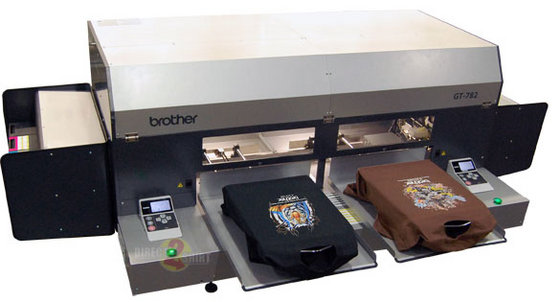
The term 3D printing originally referred to a powder bed process employing standard and custom inkjet print heads, developed at MIT in 1993 and commercialized by Soligen Technologies, Extrude Hone Corporation, and Z Corporation.
The year 1993 also saw the start of a company called Solidscape, introducing a high-precision polymer jet fabrication system with soluble support structures, (categorized as a “dot-on-dot” technique).
AM processes for metal sintering or melting (such as selective laser sintering, direct metal laser sintering, and selective laser melting) usually went by their own individual names in the 1980s and 1990s. At the time, all metalworking was done by processes that we now call non-additive (casting, fabrication, stamping, and machining); although plenty of automation was applied to those technologies (such as by robot welding and CNC), the idea of a tool or head moving through a 3D work envelope transforming a mass of raw material into a desired shape layer by layer was associated in metalworking only with processes that removed metal (rather than adding it), such as CNC milling, CNC EDM, and many others. But the automated techniques that added metal, which would later be called additive manufacturing, were beginning to challenge that assumption. By the mid-1990s, new techniques for material deposition were developed at Stanford and Carnegie Mellon University, including microcasting and sprayed materials. Sacrificial and support materials had also become more common, enabling new object geometries.

As the various additive processes matured, it became clear that soon metal removal would no longer be the only metalworkingprocess done through a tool or head moving through a 3D work envelope transforming a mass of raw material into a desired shape layer by layer. The 2010s were the first decade in which metal end use parts such as engine brackets and large nuts would be grown (either before or instead of machining) in job production rather than obligately being machined from bar stock or plate. It is still the case that casting, fabrication, stamping, and machining are more prevalent than AM in metalworking, but AM is now beginning to make significant inroads, and with the advantages of design for additive manufacturing, it is clear to engineers that much more is to come.